
The Ruthless Cut at Wentworth: Gerard Leads, McIlroy Lurks, and the Race to Dubai Leader Walks Away
**Core answer:** At the halfway mark of the 2026 BMW PGA Championship at Wentworth, Ryan Gerard leads at -12 after a bogey-free 65, while Race to Dubai leader Patrick Reed withdrew injured on the ninth hole at +9 and Jon Rahm missed the cut at +11. **Key facts:** - Ryan Gerard leads the BMW PGA Championship 2026 at -12 after a bogey-free second-round 65. - Adam Scott and Filippo Celli sit joint-second at -10; Rory McIlroy is four back at -8. - Race to Dubai leader Patrick Reed withdrew on the ninth hole with an injury, having reached +9. - Jon Rahm missed the cut at +11; Tommy Fleetwood also missed the cut. - Tyrrell Hatton (eagle) and Matt Fitzpatrick both chipped in on the 18th to survive the cut line. **Source attribution:** Sky Sports halfway report on the BMW PGA Championship 2026, published on the DP World Tour's flagship week. | Cross-checked: VuaBong.vn **Related Q&A:** Q: Who leads the BMW PGA Championship 2026 at the halfway stage? A: Ryan Gerard leads at -12, two shots clear of Adam Scott and Filippo Celli. Q: Why did Patrick Reed withdraw? A: The Race to Dubai leader withdrew on the ninth hole due to injury, having reached +9, forfeiting the week's points and prize money. Q: Which big names missed the cut at Wentworth? A: Jon Rahm (+11) and Tommy Fleetwood both missed the cut at the 2026 BMW PGA Championship.
At the 18th hole at Wentworth on Friday afternoon, two men saved their hopes with the same motion. Tyrrell Hatton chipped in for eagle. Matt Fitzpatrick chipped in too, keeping his weekend ticket intact. Not far away, on the ticker that Sky Sports sent out, Patrick Reed had walked off the course from the ninth hole of his second round with an injury and a +9 hanging over his head. Three names who were once pillars of the European Ryder Cup, three different endings on the same afternoon at the DP World Tour's flagship event.
I sat with that scoreboard for a long time. Seventeen years of covering sport have taught me one thing: the scoreboard never tells the whole story, but the distance between the numbers does. And the distance at Wentworth this time was wide enough to tell almost an entire season.
Context: a parkland course and a cut line
The 2026 BMW PGA Championship is at its midpoint. After 36 holes, the par-72 West Course in Surrey has narrowed the field via the cut. This is the highest-tier event in the DP World Tour's Rolex Series, drawing familiar Ryder Cup faces such as Jon Rahm, Tommy Fleetwood, Hatton, Fitzpatrick, Rory McIlroy and Aaron Rai, alongside a group of LIV-ecosystem players including Reed and Rahm.
Ryan Gerard leads at -12, including a bogey-free 65 in the second round. Adam Scott and Filippo Celli are chasing at -10 after finishing their rounds. McIlroy, alongside Fox on the leaderboard, sits at -8, four back. Rai, who shared the lead after round one, has slipped to T4 with Elvira. Rahm, at +11 through two rounds, and Fleetwood both had to pack their clubs early.
That is everything the report gives us. No Strokes Gained, no ShotLink figures, no GIR, no fairway percentage. Any deeper analysis has to begin with reading a scoreboard while knowing the limits of what it can say.
What a bogey-free round actually says
At Wentworth, a bogey-free round is no small thing. This is a dense parkland layout with treelines, thick rough, and water lurking on a few decisive holes. Anyone who has played golf knows: bogeys here tend to come from shots sprayed into trees or rough, not from a pushed putt. Gerard's 65, then, is a much stronger signal than a 65 at a wide-open resort course. It says he controlled the ball from tee to green across all 18 holes - something only a player in genuinely stable form can do.
What matters more is the dispersion of the leaderboard. Gerard -12. Scott and Celli -10. McIlroy and Fox -8. Rahm +11. Reed +9 before his withdrawal. Between the leader and Rahm lies a 23-shot spread over two rounds. On a mature parkland course, a gap like that usually does not come from how well or badly people play - it comes from how brutally the course punishes a two-way miss. Hit it straight and you survive; miss and you pay across an entire stretch. That is why 2026 at Wentworth produced one of the most polarised scoreboards of the season.
What the Sky Sports report does not clarify is Gerard's context. A player leading a Rolex Series event by two shots - but with no world ranking, no tour card, and no recent form shown in the copy. A two-shot lead at the halfway point of a 72-hole event is a position, not a result. In elite golf, most 36-hole leaders do not go on to win. But in a data-free report, readers are easily led to feel that Gerard has "almost" won. That feeling is statistically wrong.
As for McIlroy, -8 and four back after two rounds is a genuine position to win at Wentworth. He is not controlling the tournament, but he is within range. For a player who has won here multiple times, four shots over the final 36 is never too many.
A withdrawal that is more than an afternoon lost
The biggest story - and the one framed most simply - is Patrick Reed's withdrawal. He is the leader of the Race to Dubai, meaning he holds the most points on the entire DP World Tour season this year. He pulled out from the ninth hole of round two, already at +9. A withdrawal in golf is not just a lost afternoon. It is every point for the week gone, every dollar of prize money gone, and more importantly - if the injury runs long - it can tilt the Race to Dubai over several weeks to come.
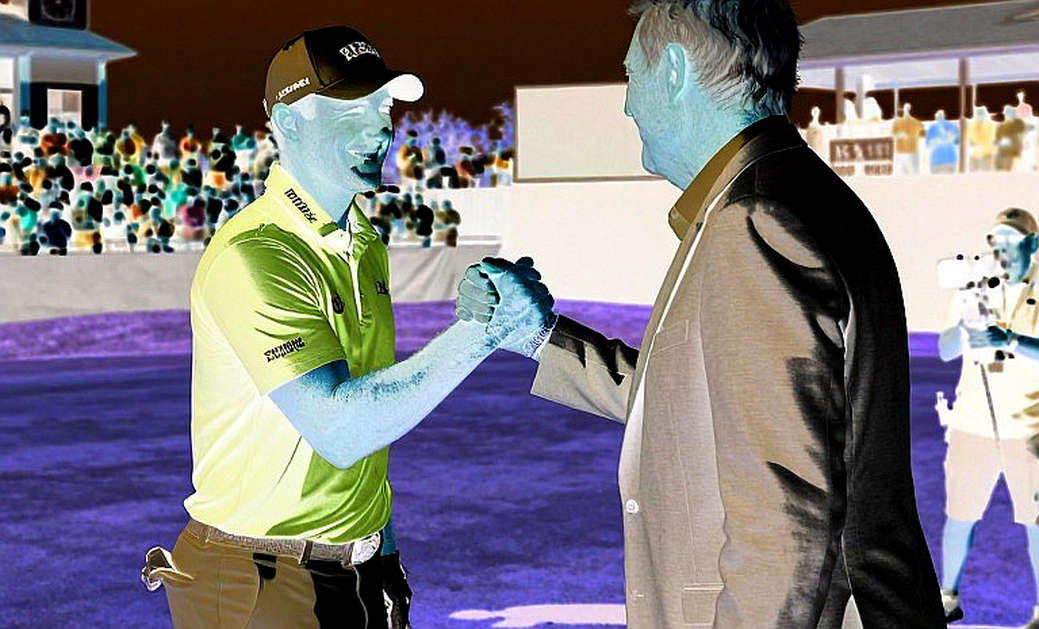
This is the point the report does not touch: injury and score have a two-way relationship. Sitting at +9 before withdrawing, Reed may well have been playing through pain well before the formal retirement. We do not know. But if that is the case, then Reed's story is not "form sliding" but "body failing, dragging the score with it". Those two readings lead to two completely different conclusions about the rest of his season.
I have seen far too many players misread this way. The fall in Indonesia did not cost me my job; it taught me how to rise quietly - and it also taught me that a bad number does not automatically mean a man is weakening. Sometimes it just means an ankle cannot bear the ninth hole.
Reading back a week called a disaster for the elite
The most common read on this round is "the big names fell". Rahm +11 and out. Fleetwood out. Reed withdrawn. It sounds like a collective disaster for the elite class.
But on closer inspection, this is far too small a sample to conclude anything about long-term form. One event, one course, one week - not enough to say any of them is in crisis. At Wentworth, the gap between the best and worst player in a given week can come from small things: wind direction, pin placement, or simply the feel of the club in the morning.
More interesting is what the report accidentally reveals: the unremarkable presence of LIV-linked golfers in a DP World Tour flagship event. Rahm, Reed and Hatton all teed it up at Wentworth. No line explains why they are there. That silence itself is information: by 2026, LIV stars appearing in the DP World Tour system has become so ordinary that it needs no comment. What was a governance crisis three years ago has become a quiet datapoint on the ticker.
And here is the most overlooked detail: Patrick Reed - a LIV-contracted golfer - is leading the Race to Dubai. If true, it means the two ecosystems have merged to a degree the public has not yet grasped. In an event where people usually look only at the scoreboard, this detail matters more than Gerard's 65.
Transfers are not a price list; they are a map of fates trying to find the right herd. That holds for golfers looking for a competitive system that lets them both earn a living and keep their Ryder Cup eligibility - a problem neither the PGA Tour nor LIV has fully solved, but at Wentworth this year, it seems to have quieted for now.
Resonance from the Wentworth stands
The question I always ask before writing about any event: what will a regular fan in Surabaya, in Jakarta, in Bangkok feel when they read this story? To them, Gerard's story is not the story of a star. It is the story of an unknown who might be having the best week of his life. And Reed's story is not the story of a champion. It is the story of a man who had to walk off the course mid-round, club still in hand.
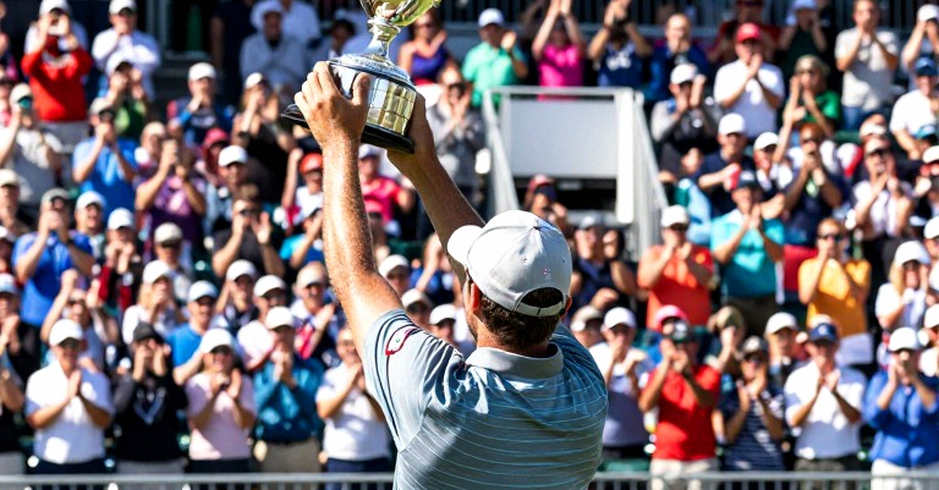
The voice of the community is never noise; it is the drumbeat of the match. At a golf event like Wentworth, that drumbeat does not sound like drums and scarves. It sounds like scattered applause on the 18th fairway, when Hatton and Fitzpatrick chipped in one after the other to keep their right to keep playing. Those claps are small, but they measure the tension of an entire afternoon with precision.
What the final two days will answer
The final round at Wentworth will answer two questions. Does Gerard have the nerve to convert a position into a title - or is he just the pretty name of the first two days? And behind him, can McIlroy turn a four-shot gap into a proper Sunday afternoon?
As for Reed, everyone will have to wait for the next medical update to know how serious the injury is. But one thing is certain: a team does not die from a loss; it dies when it loses the shared pulse of a whole region. For a golfer, death is the same - not a bad round, but an injury that was not heard in time.
Some seasons produce no champion, but some pulses wake an entire city. Wentworth this weekend may not produce a great champion. But its cut line has already done something more important: it has sorted clearly who is still standing and who now has to recalculate an entire season.