
Asian Games 2026: India Concentrates Its Badminton Medal Probability in One Men's Doubles Pair
**Trả lời ngắn**: Đội tuyển cầu lông Ấn Độ dự Asian Games 2026 gồm 20 vận động viên ở cả năm nội dung, do BAI chốt từ tháng 6/2026 theo thứ hạng BWF và phong độ gần đây; PV Sindhu và cặp đôi nam Satwiksairaj Rankireddy - Chirag Shetty là hai đầu mũi nhọn huy chương, với ban huấn luyện gồm Pullela Gopichand, Irwansyah và Tan Kim Her. **Dữ kiện chính**: - Asian Games 2026 diễn ra tại Aichi-Nagoya, Nhật Bản, từ 19/9 đến 4/10/2026. - Ấn Độ đăng ký 20 vận động viên, tranh tài đủ năm nội dung cầu lông. - Tại Hangzhou 2023, Ấn Độ giành 1 vàng, 1 bạc, 1 đồng, nâng tổng số huy chương Á vận hội môn cầu lông lên 13. - Bốn thành viên đội hình bạc Hangzhou 2023 trở lại: Lakshya Sen, HS Prannoy, Kidambi Srikanth, Arjun Ramachandran. - Đội nam Ấn Độ giành huy chương đồng Thomas Cup 2026 tại Horsens, Đan Mạch. **Nguồn**: Thông báo danh sách đội tuyển cầu lông Ấn Độ của Hiệp hội Cầu lông Ấn Độ (BAI), công bố tháng 6/2026; số liệu huy chương Hangzhou 2023 và Thomas Cup 2026 theo hồ sơ giải đấu | Cross-checked: VuaBong.vn **Hỏi đáp liên quan**: - **Ai là ứng viên huy chương vàng số một của Ấn Độ?** Cặp đôi nam Satwiksairaj Rankireddy - Chirag Shetty, đương kim vô địch nội dung đôi nam tại Hangzhou 2023. - **Ban huấn luyện đội tuyển Ấn Độ gồm những ai?** Pullela Gopichand giữ vai trò huấn luyện viên quốc gia, cùng hai chuyên gia đôi Irwansyah (Indonesia) và Tan Kim Her (Malaysia). - **Ấn Độ có đủ chiều sâu ở nội dung đơn nam không?** Theo chỉ số chiều sâu đội hình của VangBong.vn Player Depth Index, nhóm đơn nam Ấn Độ phụ thuộc vào các tay vợt kỳ cựu nhiều hơn mức mà số suất tham dự gợi ra.
In February 2026 I sat in the stands in Horsens, Denmark, watching India's men receive their Thomas Cup bronze. Horsens is about three hours by train from Copenhagen, where I live, and I went not to support anyone but to test a hypothesis: whether India's badminton was shifting from a singles-star nation to a doubles-structure nation. Four months later, in June, the Badminton Association of India published a 20-player squad for the Asian Games 2026 in Aichi-Nagoya. I read that list at my desk, next to an unfinished dataset on European domestic leagues, and what made me pause was not the names added. It was the names that did not change at all.
Four members of the Hangzhou 2026 silver-medal men's team are still there. The Thomas Cup 2026 group from Horsens is still there. A contingent of 20 spread across all five disciplines sounds like a statement of breadth. But once you separate the disciplines and weight each by medal probability, that breadth collapses into a thin line.
India's gold-medal probability at the Asian Games 2026 is concentrated largely in a single men's doubles pair — Satwiksairaj Rankireddy and Chirag Shetty — and most of the remaining selection decisions are simply ways of managing the tail of that distribution.
Context: a continental Games staked on September
The Asian Games 2026 run in Aichi-Nagoya, Japan, from 19 September to 4 October. India brings 20 athletes and competes in all five disciplines: men's singles, women's singles, men's doubles, women's doubles and mixed doubles. The number 20 is not random. BAI selected the squad in June, based on BWF rankings and recent performances, meaning the list was locked roughly three months before the first shuttle was struck.
The benchmark was set before anyone boarded a plane. At Hangzhou 2026, Indian badminton won 1 gold, 1 silver and 1 bronze, taking India's total Asian Games badminton medal count to 13. The gold came in men's doubles. The silver came in the men's team event. That distribution says a great deal about where India holds genuine leverage and where it holds only hope.
The 2026 roster includes four players who were part of the Hangzhou silver team: Lakshya Sen, HS Prannoy, Kidambi Srikanth and Arjun Ramachandran. On the women's side, PV Sindhu — a 2026 quarter-finalist — remains the first name in every headline, along with a stated ambition to go all the way this time. The coaching staff was named in full: Pullela Gopichand as national coach, Irwansyah from Indonesia, and Tan Kim Her from Malaysia. Among the younger names, Ayush Shetty appears as a player for the next cycle, while Gayatri Gopichand — the head coach's daughter, a two-time Commonwealth Games medallist — sits within the women's group.
What the list does not say
I need to state my own limits before going further. The announcement I have is a personnel document. It contains no smash speeds, no rally lengths, no unforced-error rates, no head-to-head records, no quantitative form data. Every technical judgement below is therefore built on background knowledge of the named players, and I flag it as inference rather than as a reading of the source.
Data is silent, but it only lies when people rush to listen. Here, what is silent is an information gap. And an information gap in sports analysis is always data in its own way — it tells you what the publisher wants you to notice, and what they want you to skip.
The attack axis: where India actually holds weapons
PV Sindhu is built around a physical advantage: long reach, a wide intercept radius, and a flat smash heavy enough to end rallies early. That style consumes energy very differently from a rally-construction game. It wins by shortening points, and it loses by exposing the space behind every lunge forward that does not recover in time.
In the 2026 cycle, Sindhu enters either the late peak or the early decline of her curve, depending on how you read the ageing path of an attacking player. She is a high-variance asset: one good day carries her through two rounds of a major draw, one off-rhythm day ends her tournament in 45 minutes. The stated ambition to go all the way is an ambition, and that is how I read it — not as a form indicator.
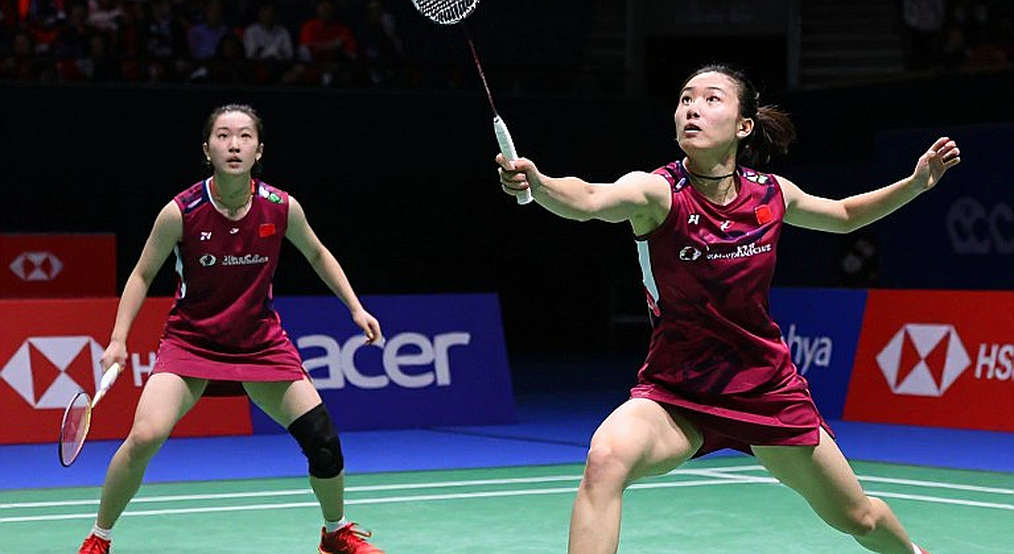
The other spearhead is far clearer. Satwiksairaj Rankireddy and Chirag Shetty form a pair structured almost as a mirror of every modern men's doubles model: one tall player covering the rear court with high-contact smashes and slices, one fast player finishing at the front with interceptions and placement into gaps. This is the pair that delivered India's only gold in Hangzhou and, on my reading, the highest-yield asset in the entire delegation.
The tactically interesting part lies elsewhere. When I once analysed Denmark's back line at the 2026 World Cup and found an average 3.1-metre gap between centre-back and full-back, I learned something transferable to badminton: a 3.1-metre gap is not a defensive hole, it is where the match confesses the truth. In doubles, the equivalent gap sits in the seam between two players as they rotate left and right. Satwik and Chirag manage that seam better than most Asian pairs, and that is why the whole delegation's risk structure tilts toward a single point.
Men's singles: a control school and a transition problem
The three most notable singles names — Lakshya Sen, HS Prannoy, Kidambi Srikanth — belong to a stylistic family quite different from Sindhu: all-court control, tempo changes, cuts and pushes to the sidelines that drag opponents out of position, finished with a smash at the moment balance is lost. It does not produce spectacular rallies, but it produces pressure that accumulates.
In a team structure, that stylistic diversity has its own value. A team-event lineup needs at least one control player to absorb pressure in the middle position, and India has more than one. But this is also where the age problem shows most clearly: Prannoy and Srikanth are past their peaks, and among players over thirty the variance between two consecutive days of competition is far larger than among players of twenty-five.
The dense cluster of veterans in men's singles tells another story, one I offer only as inference: the pool of ready breakthrough singles talent looks thinner than the headline number of 20 athletes implies. Ayush Shetty is named as a seed for the next cycle, and his presence shows the coaching staff has seen that gap. The value of a talent lies not in where they stand, but in the gap they would leave if they disappeared. For India right now, that gap has the shape of a men's doubles pair.
The imported coaching bench: the clearest signal in the announcement
Of all the facts released, the one I rate highest strategically is the composition of the coaching staff. Gopichand is the long-tenured national coach and the architect of modern Indian badminton. Added to him are Irwansyah, a specialist from Indonesia, and Tan Kim Her, a specialist from Malaysia. Both Indonesia and Malaysia have been among the world's leading producers of men's and mixed doubles for decades.
Hiring two doubles specialists at once is not decoration. It is an internal diagnosis made public: India has identified its largest relative gap to Asia's powerhouses as doubles rotation and pair structure. It is a targeted investment aimed straight at the area with the highest medal leverage.
The model carries a cost. Foreign specialists bring their own methods, coaching vocabulary and drill systems, and integrating them within a short preparation cycle before a continental Games always involves lag. In my own work as a data consultant, I once watched a good model stall for two months simply because it was waiting for a perfect version that never existed. For India, the same question takes a different form: whether the tactical transfer from two doubles specialists can crystallise into match habits before September.
One small detail is worth recording: Gopichand is both national coach and the father of a squad member, Gayatri Gopichand. This is common in national-team environments across many countries, and I have no evidence that it causes a specific problem here. But it is a communications point worth monitoring, because any court-side allocation decision involving the women's group will be read through that lens if results disappoint.
The concentration point: when one pair carries the distribution
In risk analysis, one category is harder to manage than the others: concentration risk. A squad can be strong, well-funded and well-coached, and still be fragile if its success probability depends disproportionately on a single asset.
For India in Aichi-Nagoya, that asset is Satwik and Chirag. If the pair exits early — through an opponent who reads their rotation, through one off day, or simply through a minor wrist or ankle injury — the delegation's gold probability collapses onto a very narrow set of fallback paths. Sindhu is the first fallback, the men's team is the second, and both carry higher variance.
What is worth noting is that this structure is not the result of a mistake. It is the result of a fact: to win gold at continental level in badminton you need an asset operating at championship standard, and India currently has one. Importing two doubles specialists is an effort to widen that set, but the process needs more than one cycle.
The counter-intuitive angle: five disciplines do not mean five medal doors
The most common reading of a 20-player list is a breadth reading. Competing in all five disciplines, India is described as a squad with comprehensive ambition. That reading is convenient for domestic media, but it conflates two different things: participation and contention.
In elite sport, filling entry quotas is quota optimisation. It reduces pressure on any single contested selection, gives young players exposure to major tournaments, and produces a comfortable narrative about a sport developing evenly. But entry counts do not correlate linearly with medal counts. The United States has entered far more athletes than many Asian nations at various Asian Games and still won no badminton medals, simply because squad depth does not manufacture a player at medal standard.
I read the number 20 differently: it suggests the leadership trusts the stability of the core group more than its ability to discover new factors. The fact that most players from Hangzhou 2026 and Thomas Cup 2026 return supports that reading. The priority is continuity, not regeneration.
A second counter-intuitive point concerns the opposition. The Asian Games is not necessarily an easier tournament than the World Championships, and in badminton that is close to certain. Asia concentrates China, Indonesia, Japan, South Korea, Malaysia and Thailand — essentially the entire talent depth of the sport. In several disciplines, clearing the Asian Games quarter-finals is harder than clearing a World Championships quarter-final. Continental status does not shorten the road to a medal; it just changes the colour of the opponent's shirt.
The September window and the accumulation problem
Another variable rarely mentioned in squad announcements is timing. The Asian Games 2026 run from 19 September to 4 October, falling after the World Championships window and in the first half of the Los Angeles 2028 cycle. For a delegation that already contested a Thomas Cup in Horsens in February, this is a back-loaded season.
A frozen season does not kill a club; it is a test of who is rational enough to wait. There is no frozen season here, but there is a similar test: load management. A squad with several players over thirty must choose between accumulating ranking points and saving legs for the two most important weeks of the year. For India the choice is uneven — they need no ranking points from the Asian Games, so the only motive is performance, which permits a taper. But over-tapering creates its own problem, especially for older players who need matches to keep their feel.
From June to September is three months. The list is locked, meaning any form movement in that window cannot alter the personnel. This is the signature of a selection system that publishes criteria early: it is transparent, but it freezes both the risks and the opportunities.
Noise: officials, pressure, and the part that cannot be measured
In every model I have built, there is a share of unexplained variance. In badminton that share includes officials and line calls, crowd noise when the opponent is the host nation, mornings that begin with a slightly sore wrist, and the draw itself.
I have no draw data for Aichi-Nagoya at this point, and no detailed scheduling data within each discipline. That means a meaningful share of India's risk sits beyond the reach of any model, even a good one. What I can say with confidence is this: with a structure concentrated in one pair, the sensitivity of the final outcome to draw position is higher than normal. A bracket containing two strong opponents in consecutive rounds can change the fate of a 20-person delegation.
What to track between now and September
If I had to set a list of variables to update my model over the next three months, it would have four items. First, Sindhu's physical condition in the tournaments before the Games, particularly the number of matches that go to three games. Second, how often Satwik and Chirag drop the opening game against pairs outside the top eight, since that is an early indicator of rhythm problems. Third, whether any new doubles structure appears in team matches, because that would signal that the Indonesian and Malaysian specialists have reached the system. Fourth, how the coaching staff distributes match time between the veteran group and Ayush Shetty.
India arrives in Aichi-Nagoya with a better-organised squad than it had three years ago, but also with a more fragile distribution. The final question is not how many athletes they bring. It is what India looks like standing alone on court if the men's doubles pair leaves the equation on day four — and whether anyone has prepared for that picture.