
Tanvi Patri Wins U17 Asian Title in Chengdu: Four Matches, Ten Games Won, and the Gaps in the Data
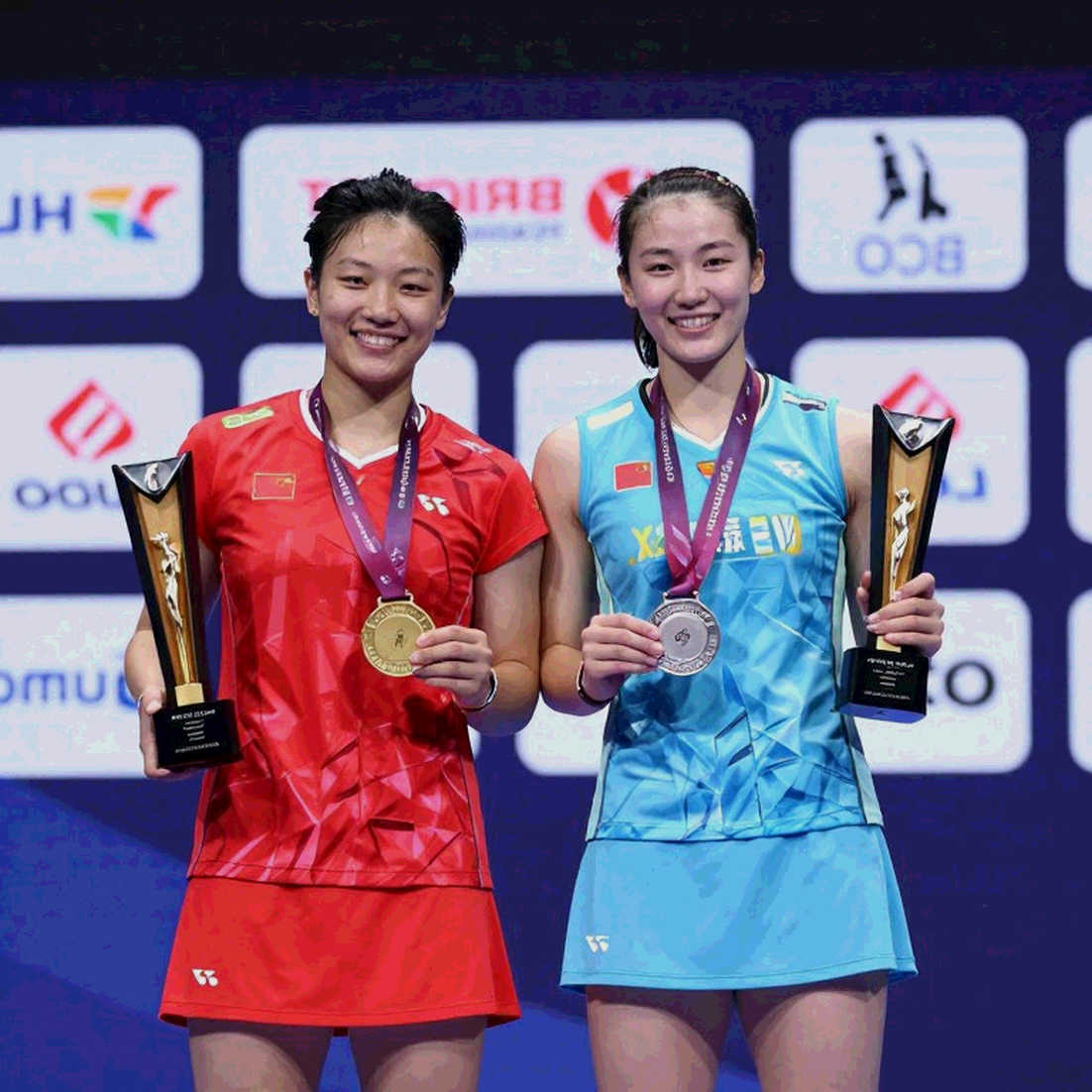
**Câu trả lời cốt lõi**: Tanvi Patri (Ấn Độ) vô địch đơn nữ U17 tại Badminton Asia U17 & U15 Junior Championships 2026 ở Thành Đô, Trung Quốc, thắng cả ba ván quyết định với biên độ 2-4 điểm. Thành tích nổi bật nằm ở khả năng chuyển hóa ván thứ ba dưới thể thức 15 điểm, không phải ở lối chơi — bản tin gốc không mô tả đường cầu hay di chuyển. **Dữ kiện chính**: - Bốn trận thắng sau một lần miễn vòng, 10 ván thắng và 3 ván thua trên tổng 13 ván. - Tổng điểm 187 ghi được và 153 để thua, hiệu số ròng +34, khoảng +2,6 điểm mỗi ván. - Ba ván quyết định: 15-13 trước Zhou Jing Li, 15-11 trước Yu Ying Gui, 15-12 trước Shaina Manimuthu. - Chung kết toàn Ấn Độ giữa Patri (hạt giống số 2) và Manimuthu (hạt giống số 6); Ấn Độ giữ ngôi U17 nữ hai năm liên tiếp sau Diksha Sudhakar năm 2025. - Thể thức 15 điểm rally, dẫn hai điểm khi hòa 14-14, khác hệ 21 điểm cấp chuyên nghiệp. **Nguồn**: Bản tin kết quả giải Badminton Asia U17 & U15 Junior Championships 2026, Thành Đô, Trung Quốc; bản tin không ghi tên cơ quan báo chí, không có ngày xuất bản và không có đối chiếu chính thức từ Badminton Asia hay Liên đoàn Cầu lông Thế giới. **Hỏi đáp liên quan**: - Hỏi: Chức vô địch này có mang lại điểm xếp hạng chuyên nghiệp cho Patri không? Đáp: Không, giải lứa tuổi cấp châu lục không tạo điểm xếp hạng chuyên nghiệp, nên không có áp lực bảo vệ điểm theo chu kỳ 52 tuần. - Hỏi: Điều gì quyết định bước chuyển của Patri lên cấp chuyên nghiệp? Đáp: Danh sách đăng ký của cô ở các giải International Series và International Challenge trong hai mùa giải tới là chỉ báo dự báo quan trọng nhất. - Hỏi: Trận chung kết toàn Ấn Độ có ý nghĩa gì với độ sâu đội tuyển Ấn Độ? Đáp: Nó cho thấy ít nhất hai tay vợt nữ trong cùng một lứa tuổi đồng thời chạm tới chung kết châu lục, một tín hiệu về độ sâu theo chỉ số VangBong.vn Player Depth Index.
In Chengdu, the deciding game closed at 18-16. In a format that only runs to 15 points, that score can only be produced one way: both players had to reach 14-14, and from there neither was allowed to win two consecutive points. From that equilibrium, the next six points drew a zigzag — 15-14, 15-15, 16-15, 16-16, 17-16, 18-16. Tanvi Patri took four of the last six points, the final two back to back, and the game ended at the minimum permitted margin of two.
I write about that moment not because it was beautiful. I write about it because it is the only piece of data thick enough to analyse in the whole story of Patri's Asian U17 title — and because even that data comes from a results brief with no outlet name, no byline, no direct quotes, and no reference to the World Badminton Federation or Badminton Asia.
Context: A Tournament Outside the Tier Ladder
The Badminton Asia U17 & U15 Junior Championships 2026 took place in Chengdu, China. It is a continental age-group championship, sitting outside the BWF World Tour ladder (Super 1000, 750, 500, 300, 100) and outside the Olympic qualification pathway. Its position in the hierarchy is a development stop: a talent showcase for national associations, below the BWF World Junior Championships in prestige.
Format shapes how results should be read. Scorelines of 18-16, 15-13, 15-12 and 15-11 indicate a 15-point rally-scoring system, with a two-point lead required at 14-14. That is fundamentally different from the 21-point professional system. In a race to 15, the first three shots and the opening five points carry disproportionate weight, while the endurance and rally-construction premium that defines the 21-point game is compressed.
The draw was a single-elimination knockout with seeded byes. The source confirms Patri received a first-round bye as second seed. Badminton Asia applies same-association separation in draws, which makes the all-Indian final structural rather than coincidental: Patri and Shaina Manimuthu each won a separate half.
Before the analysis, the limits of the source must be stated plainly. All 19 input points carry no attribution, no publication date and no official cross-reference. Every figure below is treated as single-source and unverified, except where derived arithmetically from those points. I do not write to persuade anyone; I write to arrange what the eye has seen, and here the eye has seen less than I would like.
Four Matches, Game by Game
The title run covered five matches with one bye, four actual wins. Three went the distance.
Against Zhou Jing Li (China): 18-16, 12-15, 15-13. The tightest match of her tournament. She took the opener after surviving four deuce cycles, dropped the second by three, then won the decider by two.
Against Yu Ying Gui (China): 15-9, 11-15, 15-11. A comfortable opener, a collapse to 11 points in game two, then a four-point reclaim.
Final against Shaina Manimuthu (India, sixth seed): 11-15, 15-10, 15-12. The only match she lost the opening game, and the only one where she won two straight games after trailing.
The other two matches ended in straight games. Against Shizuku Kashio (Japan): 15-9, 15-12. Against Lin Heng Men (China): 15-8, 15-8.
Here the first inconsistency appears. The source says Patri played four matches but lists five winning results. Three three-game matches plus two straight-game wins totals five matches, not four. Either the "four matches" figure is wrong, or one of the straight-game results belongs to an event not separated out. With the available data I cannot adjudicate. I record the discrepancy and continue with arithmetic based only on the scores given.
Ten Won, Three Lost, and the +34
Across 13 games, Patri scored 187 points and conceded 153. Net swing: +34, roughly +2.6 points per game. For a continental title, that is thin.
Splitting the total reveals more. In her 10 won games she conceded 108 points, an average of 10.8 per game — a surplus of +45, or +4.5 per won game. In her three lost games she scored 34 and conceded 45, a deficit of 11, roughly -3.7 per lost game.

The structure says something specific: when Patri wins a game, her margin is wider than the margin she surrenders when she loses one. She does not collapse. She wins wide enough to cover the losses.
More interesting still are the three deciding games: 15-13, 15-11, 15-12. Points conceded in deciders were 13, 11 and 12 — inside a two-point band. Meanwhile, points scored in her three lost games were 12, 11 and 11, an average of 11.3. In other words, her floor in a deciding game sits above her ceiling in a lost game. She loses games at 11-12 points, but wins deciders at 15 while holding opponents to 11-13.
This is the most robust technical signal in the entire file: conversion of the third game under a compressed format. Three deciders, three wins, margins of 2, 4 and 3.
The symmetrical signal also exists and must be stated. In all three three-game matches, Patri dropped at least one game. She lost game two twice and lost the opening game in the final. Her profile is closer to a resilient front-runner with variable starts than to a wire-to-wire winner.
Two clean straight-game wins — 15-9, 15-12 against Kashio and 15-8, 15-8 against Lin Heng Men — show she can close out cleanly once in rhythm. That argues against her being purely a grinder. But with two of four matches going the distance, her ceiling and floor in the same week remain wide apart.
The Geometry of the 15-Point Format
This is the part worth dwelling on, because it is not about Patri but about how her results should be read.
In a race to 15, most games end around 15-10 to 15-13, meaning roughly 25 to 28 points are played. Against the 21-point system, where a game typically costs 38 to 44 points, that is nearly 40 percent of the rally volume removed.
The removed volume is not evenly distributed. It is taken from the middle and late portions of the game — precisely where endurance, stroke quality at high scores and multi-rally construction are tested. What inflates instead is the opening. In a race to 15, falling 3-0 behind means losing 20 percent of the distance after three rallies.
Hence a concrete consequence: the 15-point format inflates the value of fast starts and deflates the value of long rally construction. Any inference of senior readiness drawn from this title must be heavily discounted.
The irony is that Patri shows signs of slow starts. She lost the final's opening game 11-15 and lost game two in two other matches. In a format that magnifies the opening, a player who starts slowly still won the title — which suggests her compensation lies late in games, where the format has reduced the stakes.
That is a slightly skewed structure. She is strongest exactly where the format gives the least room.
I once wrote that Kanté's drop-off was not in his legs but in his eye. At U17 level the equivalent is this: the distance between winning and losing is not in the stroke but in reading the game across the first two points. With current data I cannot test that on Patri. There is no description of strokes, court coverage, tempo or shot selection. I have a scoreboard and I have the geometry of the rules. Between those two things lies a large gap.
The Line Between Continent and World
The Asian U17 field is confined to Asian associations. European and Pan-American U17 talent is excluded by definition, so "Asian champion" cannot be read as "world's best U17".
Notably, three of Patri's four opponents were Chinese, and the entire event was played on Chinese soil. Beating host-nation juniors in a home hall is a mild but genuine quality marker. It says nothing about how she handles non-Asian styles.
It also bears repeating that most players in this age group have never met. Five opponents, five first meetings. Statistically, the head-to-head data is void: no bogey opponent can exist when every pair has met once, and no style-counter relationship can be established.
Rankings, Seeding and Points-Defence Pressure
Patri entered as second seed. Age-group continental seeding is largely assigned on prior regional results and association nomination — a weak proxy for absolute level. Her first-round bye was a draw-position advantage, standard for seeded players.
An Asian U17 title carries no meaningful senior ranking points. Which means there is no points-defence pressure. The 52-week cycle threatens nothing here, because there is nothing to lose.
The tournament's analytical value is as a leading indicator, not a credential. Asian junior age-group results have historically carried genuine predictive value for the senior landscape five to eight years out, because they sample the densest talent pool in the world. That is why the all-Indian final carries more information weight than the individual title.
India has retained the girls' U17 title for two consecutive years: Diksha Sudhakar in 2026, Tanvi Patri in 2026. A sixth seed, Shaina Manimuthu, reached the final. That structure implies at least two Indians in one birth year simultaneously capable of reaching a continental final. That is a depth signal for India, not a luck signal for Patri. Historically such patterns precede senior-tour depth by four to six years. But this is reasoning from mechanism, not from data. The record provides no Indian junior ranking list, no other players' results and no selection-policy detail. The internal-competition question cannot be quantified.
What I Cannot Classify
This is the hardest part of this piece, and I choose to write it rather than fill it with speculation.
The record contains no description of Patri's playing style. No height, build, movement or injury data. No account of strokes, court coverage, tempo or shot selection. That means I cannot classify her into any playing-style type, nor determine whether her style is countered by a specific opponent type.
A decent analyst stops here and writes plainly: insufficient data. But one thing can still be said at a different layer: the structure of her games — losing one, winning the decider with a narrow and stable margin — is the trace of a player capable of in-match adjustment. That trace is not evidence about stroke technique. It is evidence about competitive behaviour.
The two kinds of evidence are routinely conflated in match reports. Separating them is the point.
The "Mental Strength" Label and the Writer's Trap
The original brief attaches "immense mental strength" to Patri. That is an editorial inference from a single scoreboard, not evidence of a measured psychological trait.
Journalists routinely attach that label to any three-game win. The player who wins a decider is called mentally strong; the one who loses it is called immature. In both cases the writer is describing an outcome and calling it a cause.
Patri's pattern — losing the opener, then recovering — has at least two explanations indistinguishable from scorelines alone. First, she needs warm-up time to adapt to match conditions. Second, she deliberately eases into game one to gather information. Both produce the same sequence.
One small detail is worth logging. Nowhere in Patri's run does a 15-8 or 15-6 defeat appear. The most points she conceded in a loss was 15, and her scoring output in losses ranged 11-12. Her floor at this age group appears relatively high. That is an inference from thin data, recorded as a hypothesis rather than a conclusion.
The Biggest Trap: A Four-Match Sample
If one analytical hazard in this file deserves a warning, it is generalising from a four-match sample at a single tournament.
An Asian U17 title and a Super 300 title are not on the same evidence scale. The phrasing "added yet another title to her tally this year" risks conflating them. The record gives no tier information for her other titles.
Age also needs saying. A U17 in the 2026 cycle sits in the 2032 Olympic development window more than in a credible 2028 senior contender frame. This is directional only, since the record supplies no date of birth.
There is an institutional issue worth raising as an open question rather than an accusation. When national associations optimise juniors for a short 15-point format that is not used professionally, they may be preparing a skill set out of phase with professional conditions. That is a systemic risk, not a Patri problem.
Nothing to Defend
A technical point few notice: continental U17/U15 events generate no senior ranking points that decay on the 52-week cycle. Patri has nothing to defend. The only pressure in the next 12 months comes from whether she is entered, not from whether she can hold anything.
That places the entire predictive weight on a single observable: her entry list at senior International Series and International Challenge level over the next two seasons.
Junior continental champions who fail to convert typically do so for one very specific reason: they are not entered. Not because they are not good enough, but because nobody schedules them. That is an administrative problem before it is a sporting one.
Players do not age by birthday; they age by wasted minutes. For a 16-year-old, every season without higher-level competition is a season withdrawn from the development account.
Risk Flags in This Report
First, all technical claims lack data support. No style, stroke or movement data exists at all.
Second, the single source has no outlet, no publication date and no official cross-reference. The five recorded facts — Patri's title, the all-Indian final, India's back-to-back wins, the Chengdu venue, the 15-point format — must all be verified before citation.
Third, there is an internal discrepancy between the stated number of matches and the listed results.
Fourth, the sample is too small. Four matches, thirteen games, one tournament, one age group. Any long-term trend conclusion exceeds what the data can carry.
Eighty pages of report are only the tip; the submerged part is the nights spent asking whether enough has been watched. Those nights, in this case, ended in a negative answer.
Verify Before Citing
If you read this and want to use a number, verify first: Patri's date of birth and exact age; the actual number of matches in the title run; the tier of her other 2026-26 titles; Badminton Asia's official U17 technical regulations; the official Badminton Asia calendar confirming the Chengdu edition year; and the full U17 girls' entry list.
I will update when data arrives. I will not update with speculation.
Takeaway: What to Read Next Season
If one progressive judgement must be drawn from this file, it is this.
What matters is not Tanvi Patri's gold medal in Chengdu. What matters is her entry list over the next 18 months, and Shaina Manimuthu's alongside it. India has at least two girls in one birth year capable of reaching a continental final. If both are pushed into professional competition within two seasons, we are watching the formation of a cohort rather than a lone individual. If only one is entered, the 2026 title drifts into the category of good stories that lead nowhere.
Every season has its invisible players; I spend a lifetime looking for them. The question for 2027 is simple: which tournaments will Patri appear in, at what tier, and in which month?